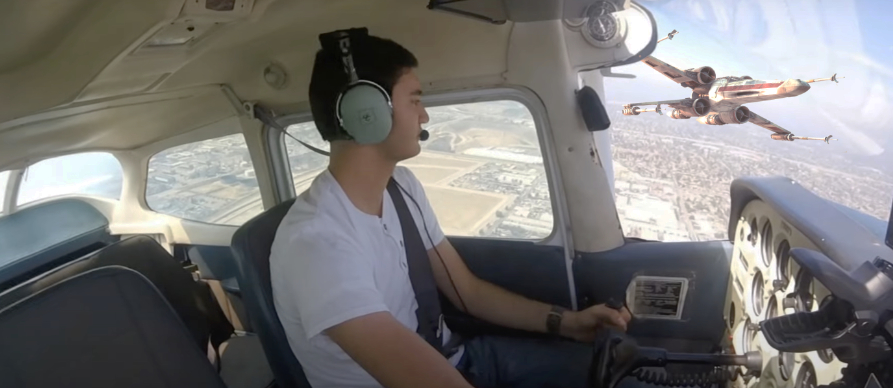
As a pilot it is your responsibility to ensure that you are aware of the airspace you are flying in at all times. Failure to do so could result in the suspension or revocation of your pilot certificate. You may also have to pay fines, or even get hit with federal criminal charges.
Using GPS or an EFB (e.g ForeFlight) can help guard against flying into any airspace that may result in action being taken against you. These systems help you know exactly where you are relative to any restricted airspace, including temporary flight restrictions. However GPS and EFBs alone do not guarantee that you are clear of such airspace. Changes and restrictions to airspaces can happen at any time and at very short notice.
You need to understand the different types of airspace and the restrictions these airspaces involve. These special use airspaces include:
- Prohibited Areas
- Restricted Areas
- Warning Areas
- Military Operations Areas (MOAs)
- Alert Areas
- Controlled Firing Areas
- National Security Areas
And other airspace includes things such as
- Military training routes
- Parachute jump aircraft operations
- Temporary flight restrictions (TFRs)
Temporary Flight Restrictions (TFR)
- Protect people and property both in the air and on the ground
- Provide for a safe operating environment, and
- Can pop up at any time without warning
- You should be aware of TFRs associated with power plants, stadiums and political VIPs
- Check NOTAMs (even during flight) when in the area of a TFR
- You can find current textual and graphical TFR information here
- Below is a graphical representation of the general rules to follow when flying in or near a security TFR
Flight following
Flight following on all flights is recommended in order for ATC to monitor you – in order for them to inform you of any changes to a special use airspace or TFR status etc. This way if you’re about to fly somewhere you shouldn’t this can be avoided.
Recently an F-35 intercepted three small planes that accidentally flew into a TFR during the Republican National Convention in Milwaukee. And as cool as flying in formation with an F-16 would be, it is better to do that kind of thing intentionally versus get intercepted and losing your pilot certificate license.
Getting Intercepted
In conjunction with the FAA, Air Defense Sectors monitor air traffic and could order an intercept in the interest of national security or defense. Intercepts during peacetime operations are vastly different than those conducted under increased states of readiness. The interceptors may be fighter jets, x-wings or rotary wing aircraft.
Military interception usually happens after failure to make the aircraft comply by other means (such as radio, light signals, flares). The primary method is to use visual communications, which is extremely difficult for the pilot to miss.
The instructions to follow (wide level turn), land (low pass, landing gear extended), and continue on course (climbing turn) are established to avoid any confusion. It is your responsibility to know them.
The most common cause for interception is that a pilot has – without any malicious intent, strayed into restricted airspace or a TFR (Temporary Flight Restriction) without talking to anyone on the radio.
The reasons for aircraft intercept include, but are not limited to:
- Identify an aircraft;
- Track an aircraft;
- Inspect an aircraft;
- Divert an aircraft;
- Establish communications with an aircraft.
When specific information is required (i.e., markings, serial numbers, etc.) the interceptor pilot(s) will respond only if, in their judgment, the request can be conducted in a safe manner.
In all situations, the interceptor pilot will consider safety of flight for all concerned throughout the intercept procedure. The interceptor pilot(s) will use caution to avoid startling the intercepted crew or passengers and understand that maneuvers considered normal for interceptor aircraft may be considered hazardous to other aircraft.
All aircraft operating in U.S. national airspace are highly encouraged to maintain a listening watch on VHF/UHF guard frequencies (121.5 or 243.0 MHz). If subjected to a military intercept, it is incumbent on civilian aviators to understand their responsibilities and to comply with ICAO standard signals relayed from the intercepting aircraft. Specifically, aviators are expected to contact air traffic control without delay (if able) on the local operating frequency or on VHF/UHF guard.
If the pilot does not comply with the instruction of the intercepting aircraft – there is a chance that it may result in the use of force.
In the unfortunate event that you are ever intercepted by U.S. military or law enforcement aircraft – As the pilot of an intercepted aircraft, you must immediately
- Follow the instructions they receive from an intercepting aircraft (see below)
- Try to establish radio communications on 121.5 with either the intercepting aircraft, or ATC
- Give your identity, position, and the nature of the flight
- Set 7700 in the transponder unless ATC says otherwise
You must understand the visual signals that can be used for communication during an interception.
If you see the intercepting aircraft
- Rocking the wings and flashing lights – It means you are being intercepted and need to follow the intercepting aircraft,
- You would respond by also rocking the wings and following
- Abruptly break-away from the intercepted aircraft – means you may proceed
- Again, you would rock their wings in reply
- Circling an airport, lowering the landing gear, and overflying the runway in the direction of landing means land at this airport
- You would also lower the landing gear, follow the intercepting aircraft, and land once you determine it is safe to do so
Remember – Be aware that if you do not quickly comply with intercept instructions, the intercepting aircraft may use deadly force
Fighter Intercept Phases
1. Approach Phase.
As standard procedure, intercepted aircraft are approached from behind. Typically, interceptor aircraft will be employed in pairs, however, it is not uncommon for a single aircraft to perform the intercept operation. Safe separation between interceptors and intercepted aircraft is the responsibility of the intercepting aircraft and will be maintained at all times.
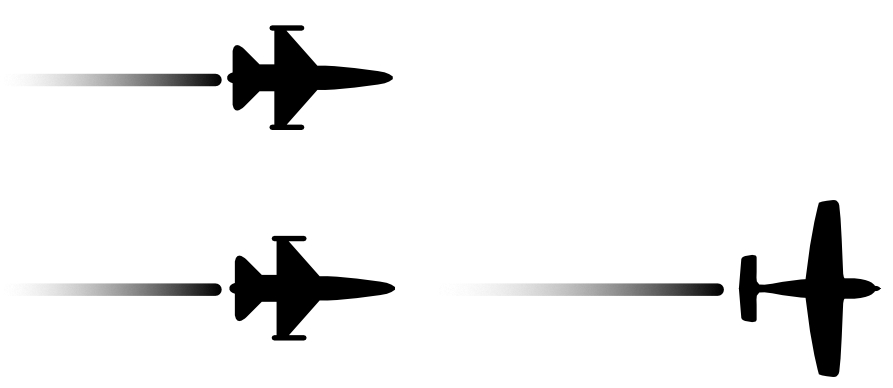
2. Identification Phase
Interceptor aircraft will initiate a controlled closure toward the aircraft of interest, holding at a distance no closer than deemed necessary to establish positive identification and to gather the necessary information. The interceptor may also fly past the intercepted aircraft while gathering data at a distance considered safe based on aircraft performance characteristics.
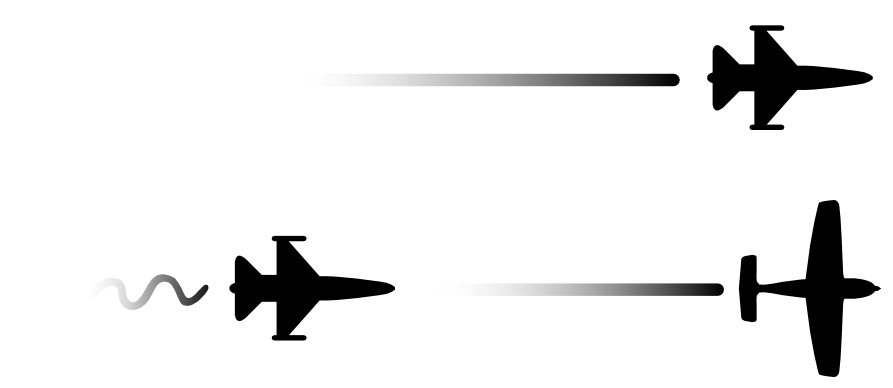
An interceptor may attempt to establish communications via standard ICAO signals. In time-critical situations where the interceptor is seeking an immediate response from the intercepted aircraft or if the intercepted aircraft remains non-compliant to instruction, the interceptor pilot may initiate a divert maneuver.
3. Post Intercept Phase.
Diversion with Flares Dispensed (if required)
In this maneuver, the interceptor flies across the intercepted aircraft’s flight path (minimum 500 feet separation and commencing from slightly below the intercepted aircraft altitude) in the general direction the intercepted aircraft is expected to turn.
The interceptor will rock its wings (daytime) or flash external lights/select afterburners (night) while crossing the intercepted aircraft’s flight path. The interceptor will roll out in the direction the intercepted aircraft is expected to turn before returning to verify the aircraft of interest is complying.
The intercepted aircraft is expected to execute an immediate turn to the direction of the intercepting aircraft. If the aircraft of interest does not comply, the interceptor may conduct a second climbing turn across the intercepted aircraft’s flight path (minimum 500 feet separation and commencing from slightly below the intercepted aircraft altitude) while expending flares as a warning signal to the intercepted aircraft to comply immediately and to turn in the direction indicated and to leave the area.
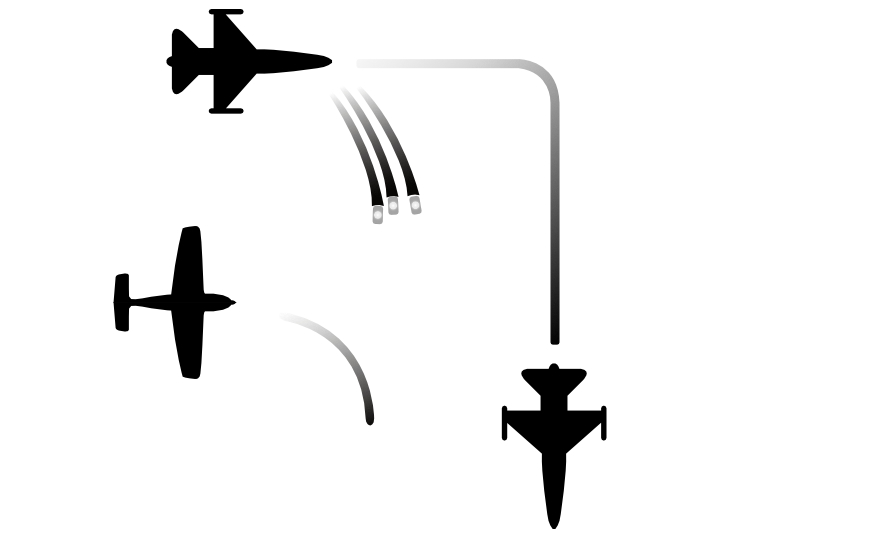
The interceptor is responsible to maintain safe separation during these and all intercept maneuvers.
Flight safety is paramount.
Aircraft Complying
The crew of the intercepted aircraft must continue to comply with interceptor aircraft signals and instructions until positively released.
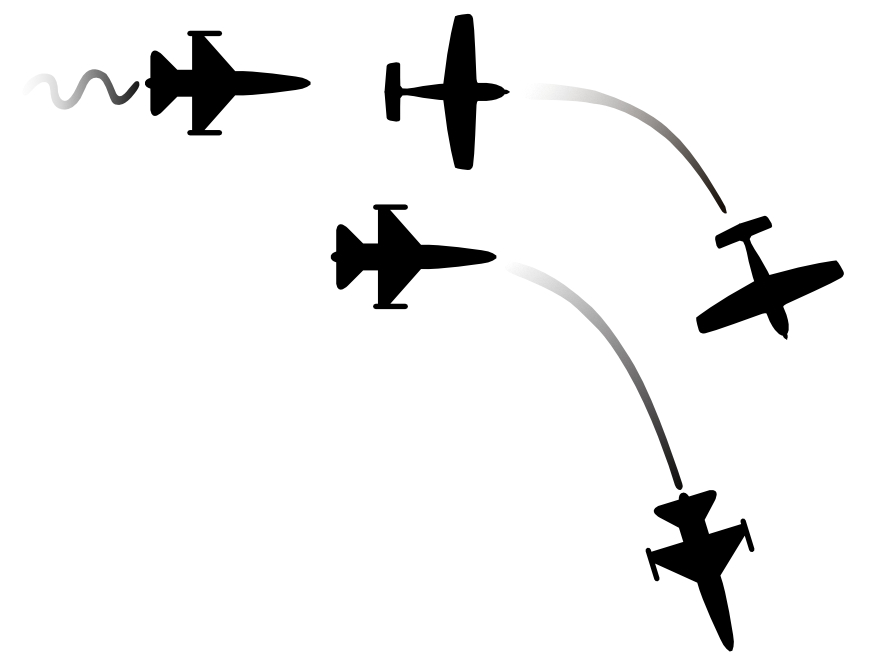
You must know how to react if are intercepted. The FAA provides guidance on what you should do.
FAA In-Flight Intercept Procedures
In 2015, the FAA published this document covering intercept procedures. It is good practice to have this or similar available to you in your flight bag / EFB for such an occurrence.