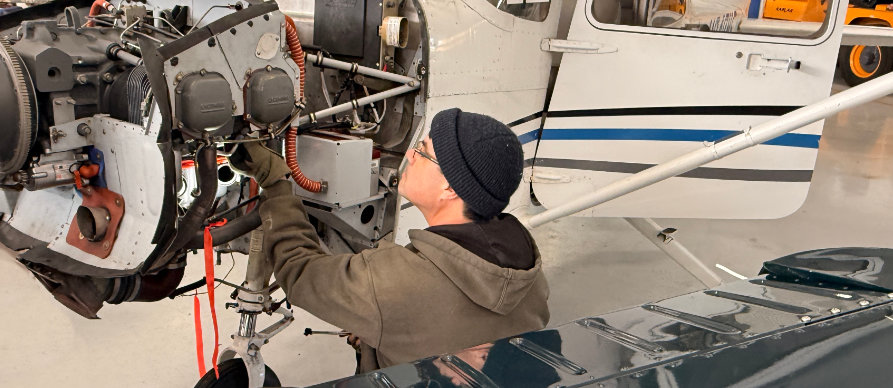
14 CFR part 91, states that the primary responsibility for maintaining an aircraft in an airworthy condition falls on the
owner or operator of the aircraft. Certain inspections must be performed on the aircraft, and the owner must maintain the airworthiness of the aircraft during the time between required inspections by having any defects corrected.
14 CFR § 91.409 is the primary regulation governing inspection frequencies for general aviation. All civil aircraft are required to be inspected at specific intervals to determine the overall condition.
The interval depends upon the type of operations in which the aircraft is engaged. All aircraft need to be inspected at least once every 12 calendar months, while inspection is required for others after every 100 hours of operation.
Advisory Circulars (ACs): Provide guidance on acceptable maintenance practices, like AC 20-106 for general aviation and AC 43.13-1B for acceptable methods.
Airworthiness Directives (ADs): Mandatory corrections issued by the FAA for specific safety issues.
Required Inspections
Annual Inspection
- Required every 12 calendar months for most general aviation aircraft,
- Must be completed by an FAA-certified mechanic with an Inspection Authorization (IA).
- The aircraft may not be operated unless the annual inspection has been performed within the preceding 12 calendar months.
- A period of 12 calendar months extends from any day of a month to the last day of the same month the following year.
- An aircraft overdue for an annual inspection may be operated under a Special Flight Permit issued by the FAA for the purpose of flying the aircraft to a location where the annual inspection can be performed.
- All applicable Airworthiness Directives that are due must be complied with before the flight.
100 Hour Inspection
- All aircraft under 12,500 pounds (except turbojet/ turbo propeller-powered multi-engine airplanes and turbine powered rotorcraft), used to carry passengers for hire, must receive a 100-hour inspection within the preceding 100 hours of time in service and must be approved for return to service.
- Required for aircraft used for hire or flight instruction, often done in conjunction with or instead of annuals in a progressive schedule.
- This inspection must be performed by an FAA-certificated A&P mechanic, an appropriately rated FAA-certificated repair station, or by the aircraft manufacturer. An annual inspection, or an inspection for the issuance of an Airworthiness Certificate, may be substituted for a required 100-hour inspection.
- The 100-hour limitation may be exceeded by no more than 10 hours for the purpose of traveling to a location at which the required inspection can be performed. Any excess time used for this purpose must be included in computing the next 100 hours of time in service.
Progressive / Phased Inspection
Progressive (or phased) Inspection is a method of inspectons where instead of performing a full annual inspection once every 12 months, the work is into smaller, broken down into smaller more frequent segments that allows for more frequent but shorter inspection phases.
This minimizes aircraft downtime by spreading the work out over time, while still completing the entire annual scope within 12 months,
- The inspection cycle is completed when the last inspection is endorsed.
- East Coast Air Club uses a four inspection phase at 60-hour intervals.
Pre-Flight Inspection
The pre-flight inspection is a check performed by the pilot before each flight to ensure the aircraft’s basic integrity and required documents are onboard. This inspection is equally (if not more) important as all other mandated inspections.
The pre-flight inspection determines whether the aircraft is airworthy – for the flight YOU are about to make – surely worthy of your time, attention and best efforts.
No person may operate a civil aircraft unless it is in an airworthy condition.
The pilot in command of a civil aircraft is responsible for determining whether that aircraft is in condition for safe flight. The pilot in command shall discontinue the flight when unairworthy mechanical, electrical, or structural conditions occur.
- When performing a pre-flight inspection you must understand what you are checking and why you are checking it.
- Know what is normal and abnormal, what is airworthy and what is not.
- Look for a reason NOT to fly – if you cannot find that reason you have determined the aircraft is in condition for safe flight!
- Always use the approved (ECAC) checklist to ensure no element is missed during a pre-flight inspections
Airworthiness Directives (ADs)
Airworthiness Directives (ADs) are legally enforceable orders from the FAA to correct unsafe conditions, mandatory for continued airworthiness, in aircraft, engines, propellers, or parts, ensuring safety by requiring inspections or repairs for design flaws or defects before further flight, making compliance essential for continued airworthiness
They are issued for products with known safety issues and specify required actions, conditions, or limitations to maintain safe operation, with non-compliance a violation.
- Mandatory: Compliance is not optional; it’s a legal requirement for an aircraft to remain airworthy.
- Issued By: The FAA.
- Purpose: To resolve unsafe conditions (design flaws, manufacturing errors, maintenance issues) in specific aeronautical products.
- Content: Detail required inspections, maintenance, or operational changes.
- Enforcement: Operating an aircraft without complying with an applicable AD is a violation.