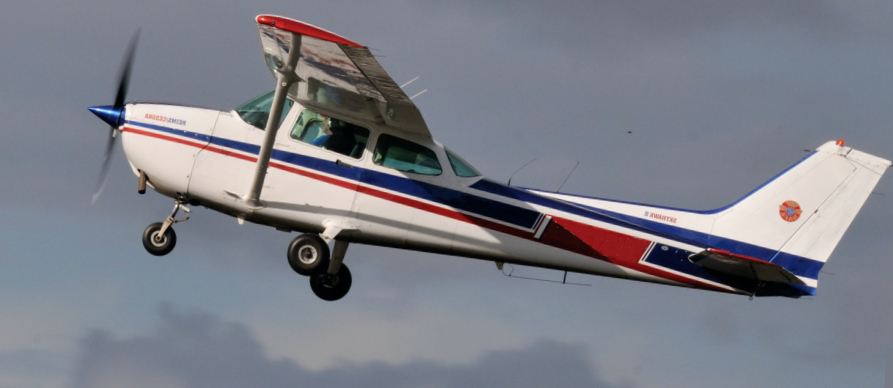
Lift and its Dependence on Angle of Attack
The relationship between the generation of lift and stalls is closely tied to the angle of attack (AoA) and the aerodynamic behavior of an airfoil (such as a wing).
Lift is generated by the pressure difference between the upper and lower surfaces of an airfoil as it moves through the air. This creation of lift on the wing is influenced by the Angle of Attack.
As the Angle of Attack increases, the lift generated by the wing increases up to a certain point. This relationship is typically linear in the initial stages.
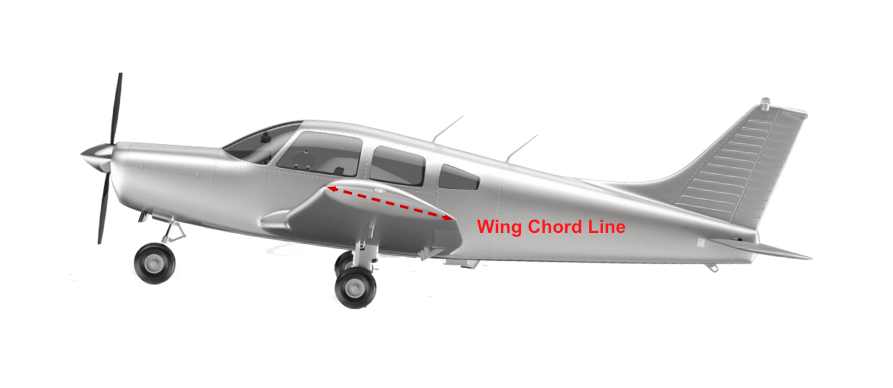
Wing Chord Line
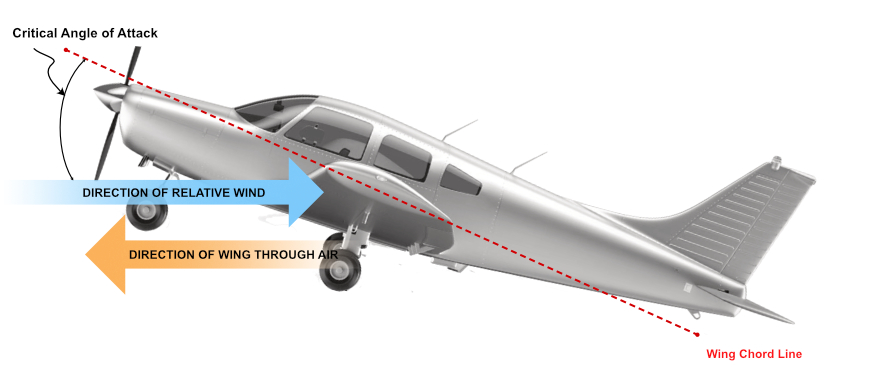
The chord line of a wing is an imaginary straight line connecting the leading edge (front) of the wing to the trailing edge (back) of the wing.
It serves as a reference line for various aerodynamic calculations and analyses.
Angle of Incidence
The angle of incidence refers to the fixed angle between the airplane’s wing chord line and the longitudinal axis of the fuselage. This angle is set during the design and construction of the aircraft and plays a critical role in its aerodynamic characteristics. Unlike the angle of attack, which changes during flight, the angle of incidence is a fixed structural parameter of the aircraft.
Effects on Aerodynamics
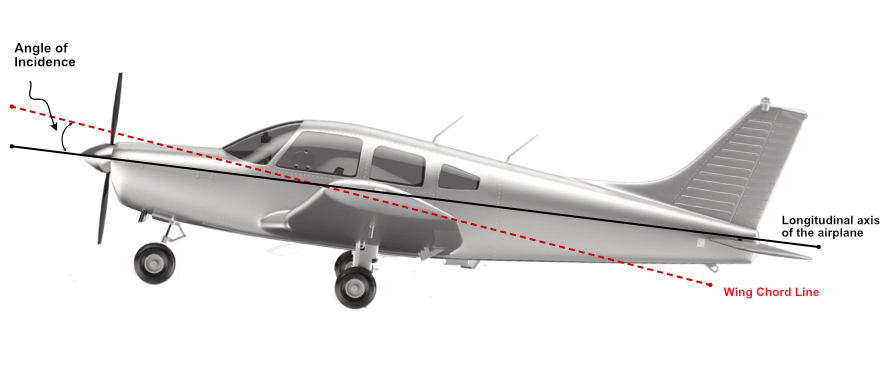
- The angle of incidence affects how the wing generates lift at different speeds and angles of attack. A properly designed angle of incidence helps ensure the aircraft can generate sufficient lift during takeoff, flight, and landing.
- Different types of aircraft have different optimal angles of incidence based on their design purpose. For example, gliders have a different angle of incidence compared to commercial airliners or fighter jets.
- A well-chosen angle of incidence contributes to the overall stability and control of the aircraft. It influences the natural pitching moment and can help achieve a desirable balance between lift and drag.
- The wing design, including aspects like dihedral angle, aspect ratio, and airfoil shape, influences the optimal angle of incidence.
- The angle of incidence is chosen to optimize the aircraft’s performance for its intended role, such as maximizing fuel efficiency, achieving higher speeds, or providing better short takeoff and landing (STOL) capabilities.
Angle of Attack (AoA)
The angle of attack (AoA) refers to the angle between the chord line of an airplane’s wing and the oncoming airflow (relative wind). This angle plays a crucial role in the aircraft’s aerodynamics and flight performance.
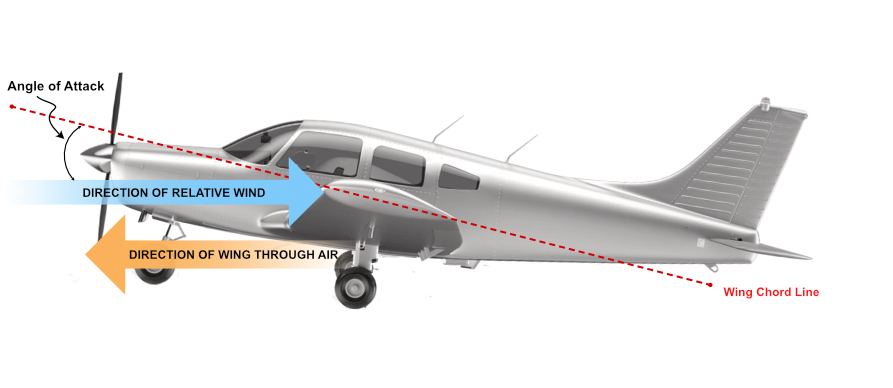
The angle of attack directly influences the lift and drag forces acting on the airplane. As angle of attack increases, lift increases up to a point, but so does drag.
Every wing has a critical angle of attack , known as the stall angle, beyond which the airflow separates from the wing’s surface, causing a dramatic loss of lift. This condition is called a stall and can lead to a loss of control if not managed properly.
Pilots control the angle of attack using the aircraft’s elevator, which adjust the pitch attitude of the airplane. Adjusting pitch changes the angle of attack and thus the lift and drag characteristics.
Relationship Between Angle of Attack and Stalls
- Efficient flight involves managing angle of attack to balance lift and drag. Flying at too high an angle of attack increases drag and fuel consumption, while too low an angle of attack may not provide sufficient lift.
- Each airfoil has a specific critical angle of attack, typically between 15 to 20 degrees, depending on its design.
- When the Angle of Attack exceeds this critical angle, the airflow can no longer smoothly adhere to the surface of the airfoil, causing a stall.
Indications of a Stall:
- In aircraft, pilots can often detect an approaching stall by a buffeting sensation or through stall warning systems.
- There are also visual indicators such as changes in pitch attitude and decreased airspeed.
Recovery from a Stall:
- To recover from a stall, the AoA must be reduced below the critical angle. This is typically achieved by pushing the aircraft’s nose down to reestablish smooth airflow over the wings.
- Once the airflow is reattached, lift increases again, allowing normal flight to resume.
Practical Implications
- Aircraft Performance: Understanding and managing Angle of Attack is crucial for maintaining lift and preventing stalls during various phases of flight, such as takeoff, landing, and maneuvering.
- Training: Pilots are trained to recognize the signs of an impending stall and to execute recovery procedures promptly.
- Design: Aircraft and wing designs incorporate features such as slats, flaps, and winglets to modify the critical AoA and improve stall characteristics.
By understanding the relationship between AoA and stalls, pilots can ensure safer flight operations and better manage the aerodynamic performance of their aircraft.